
What dose of exercise predicts knee OA improvement
Does frequency, volume, or intensity drive better KOOS and VAS outcomes in knee osteoarthritis? A review of recent evidence on adherence, dosing, and clinical impact.
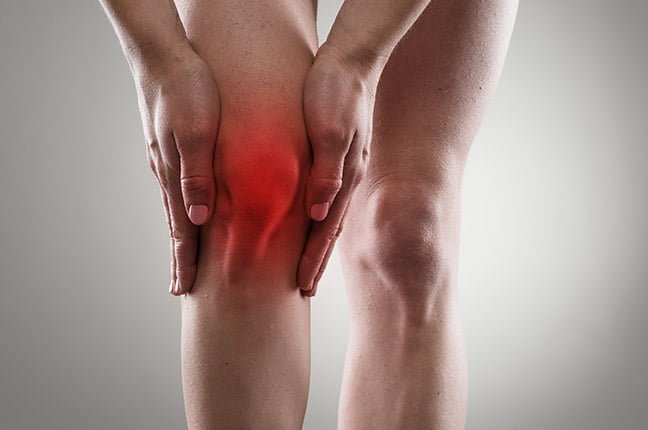
We prescribe exercise for knee osteoarthritis (KOA) with the assumption that more is better. The guidelines are clear: strengthen the quadriceps, improve function, reduce pain. But when we look at the data — specifically patient-reported outcomes like KOOS and VAS against the actual 'dose' delivered — the picture becomes murkier. Does a patient need to train three times a week to see a drop in their VAS score? Is it the total volume (sets/reps) or the frequency that matters most? And what happens when we try to scale this beyond the controlled environment of the clinic? The literature suggests that while strengthening is non-negotiable, the specific metrics of adherence — frequency versus volume versus intensity — do not map linearly onto clinical improvement in the way we often teach. In fact, some of the strongest signals for improvement come from high-intensity aerobic work or combined kinetic chain protocols, rather than simple repetition counts.
Intensity drives structural and functional change
A common clinical heuristic is to start low and go slow to avoid flare-ups. However, recent RCT data challenges the idea that low-intensity is sufficient for meaningful structural and symptomatic change in moderate-to-severe KOA. Song et al. (2026) compared low (50-60% HRR), moderate (60-70% HRR), and high-intensity (70-80% HRR) aerobic exercise in patients with Kellgren-Lawrence grade 2-3 OA. The high-intensity group demonstrated the greatest reductions in cartilage degradation markers (C-terminal telopeptide of type II collagen) and the largest improvements in WOMAC scores (-45.3%) and VAS pain (-52.5%). Among participants in the high-intensity group, 73% achieved the minimal clinically important differences (MCID) for WOMAC total score and 80% achieved the MCID for VAS pain. This suggests that if the goal is significant reduction in pain and improvement in function, the intensity of the stimulus may be a stronger predictor of outcome than mere frequency. Of course, this was supervised treadmill/cycling work; translating this to home adherence requires careful monitoring to ensure safety without dropping the intensity below the therapeutic threshold.
Frequency alone does not guarantee adherence
If intensity drives the physiological change, what about the logistics of getting the patient to do it? We often prescribe exercises three times a week as a standard. But does doing them once a week yield different results if the volume is matched? While results are pending, the very existence of this study highlights the uncertainty in our field regarding optimal frequency. Adherence decay remains a primary reason strengthening fails in routine care. The challenge is no longer whether strengthening works, but under what conditions it works consistently at scale. Key modifiers include patient heterogeneity and 'flare-aware delivery.' A flexible approach that allows for volume adjustment based on daily pain levels might preserve long-term engagement better than a fixed calendar schedule.
Volume and complexity matter more than simple reps
When we disaggregate volume, we must look at how it's structured. Maqsood et al. (2026) found that adding core stability to kinetic chain exercises yielded superior improvements in KOOS total scores (+34.8 vs +25.7) and pain reduction compared to kinetic chain exercises alone. Here, the 'volume' wasn't just more reps; it was a more complex, integrated movement pattern. This supports the idea that the quality and integration of the movement (kinetic chain + core) predicts better functional outcomes than isolated strengthening volume. This reinforces the need to individualize volume based on patient characteristics (like BMI) rather than applying a universal rep count.
Real-world step count correlates with function
Beyond the clinic, daily activity volume matters. Narkbunnam et al. (2026) conducted a nationwide cross-sectional study in Thailand linking objectively measured daily step counts to health outcomes in Thai adults aged ≥ 60 years. They found a significant monotonic dose-response relationship: higher step counts (>15,000/day) were associated with significantly better KOOS scores (+9.5 points), faster gait speed, and shorter TUG times compared to low step counts (≤3,000/day). While this is observational and not an intervention trial, it provides a strong ecological validity to the idea that general movement volume (steps) is a robust predictor of functional status in KOA. For the clinician, this means that prescribing 'exercise' should ideally encompass both targeted strengthening/aerobic work AND general daily mobility, as both contribute to the overall KOOS/VAS profile.
So, what changes in your practice? The evidence suggests moving away from a one-size-fits-all '3 sets of 10' prescription. Instead, consider: 1. Prioritize Intensity within Safety Limits: If the patient can tolerate it, aim for higher intensity aerobic or resistance work to maximize MCID achievement, rather than just low-load endurance.
2. Individualize Volume by Body Mass: For overweight patients, monitor volume relative to body weight (e.g., kcal/kg) to avoid mechanical overload.
3. Flexible Frequency: Don't be dogmatic about 3x/week. Use flare-aware delivery to adjust frequency based on daily symptoms, potentially improving long-term adherence.
4. Track General Activity: Encourage step count goals alongside specific exercises, as general mobility volume correlates strongly with functional outcomes.
References
- Maqsood M, Sohail J, Batool SA. Combined mode-kinetic chain exercise with and without core stability exercises on patients with knee osteoarthritis. BMC musculoskeletal disorders (2026) · PMID 41987086
- Song L, Meng Y. Effect of aerobic exercise of different intensity on articular cartilage metabolism in patients with knee osteoarthritis: A randomized controlled trial. Medicine (2026) · PMID 42216405
- Narkbunnam R, Chareancholvanich K, Achawakulthep C et al. Dose-response association between daily step count and health-related outcomes in older adults: a nationwide cross-sectional study in Thailand. BMC geriatrics (2026) · PMID 42151829