
What recent evidence says about exercise effectiveness and adjunctive treatments in rotator cuff tendinopathy
Network meta-analyses rank concentric strengthening as the most effective exercise for dysfunction, while psychological factors and central sensitization explain outcome variability that structural diagnosis alone cannot.
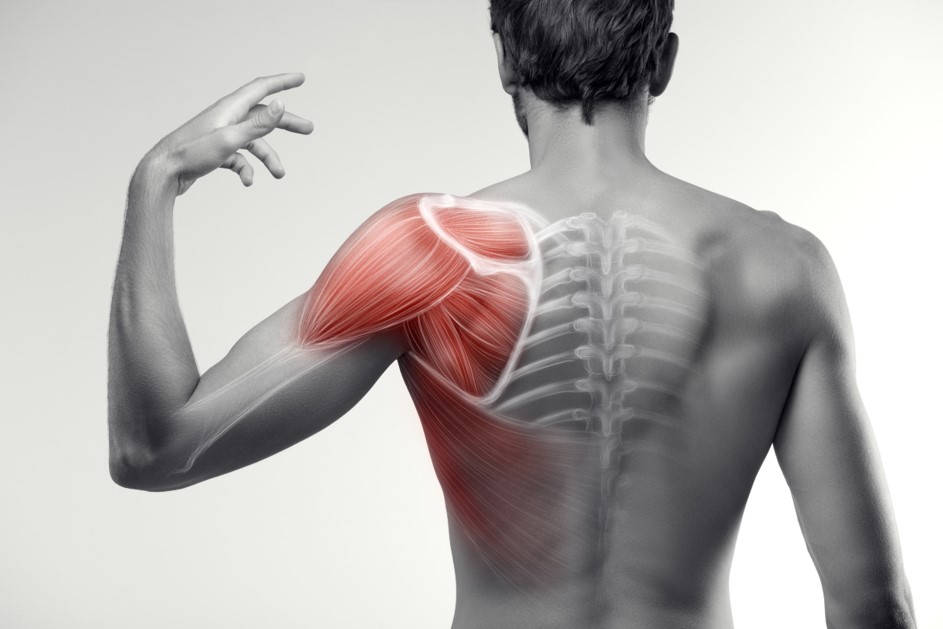
Rotator cuff tendinopathy is a high-volume presentation in musculoskeletal practice. The burden is significant: shoulder pain has the strongest impact on quality of life among common musculoskeletal sites, affecting both physical and mental health domains (Imagama et al., 2020). For years, the clinical debate has centered on whether to prioritize manual therapy, injection, or exercise. Recent network meta-analyses have begun to map the comparative effectiveness of these interventions, moving us from anecdotal preference to evidence-based ranking. The question is no longer whether exercise works—it does. The question is which type of exercise yields the best outcomes for pain and function, and where other modalities fit into the hierarchy.
Concentric training leads in dysfunction
A recent Bayesian network meta-analysis comparing seven types of exercise for rotator cuff-related shoulder pain provides a clear hierarchy (Zhang et al., 2025). When analyzing shoulder dysfunction, concentric strengthening training demonstrated a significant advantage in most comparisons and was identified as the most effective intervention based on the surface under the cumulative ranking curve (SUCRA). However, the specific modality matters. While general loading is beneficial, the data suggests that prioritizing concentric strength over other forms may optimize functional recovery. It is worth noting that subgroup analyses reveal population nuances. CORTAR A FRASE INTEIRA. This reinforces the need to tailor exercise prescription not just by tissue pathology, but by activity demands and patient profile.
Injections offer short-term relief only
Where do injections sit in this hierarchy? Narrative reviews of corticosteroid and platelet-rich plasma (PRP) injections indicate a temporal split in efficacy (Kyaw & Khin, 2025). Corticosteroids provide robust short-term pain relief (<3 months), making them useful for rapid symptom control. However, their benefits wane over time, and repeated use may impair tendon healing. PRP aims to promote tissue repair and may offer more durable improvements at mid-to-long term (6-12 months), though evidence remains heterogeneous due to variations in preparation protocols. CORTAR A FRASE INTEIRA. High-intensity laser therapy (HILT) also shows promise for pain reduction and disability improvement, particularly in shoulder-related conditions, though effect sizes vary. These modalities serve as adjuncts rather than replacements for active rehabilitation.
Psychology predicts outcome better than structure
Perhaps the most critical insight from recent literature is that structural diagnosis explains very little of the variance in treatment outcomes. A multicentre longitudinal cohort study found that baseline patient expectations, pain self-efficacy, and lower baseline disability were consistently associated with better physiotherapy outcomes, whereas clinical examination findings linked to specific structural diagnoses were not (Chester et al., 2018). High levels of resilience and positive recovery expectations correlate with lower pain and disability. Furthermore, there is evidence of nervous system sensitization in persistent tendinopathies, including lowered pressure pain thresholds at and distant from the site of injury, suggesting central sensitization plays a role. This mechanistic understanding helps explain why loaded therapeutic exercises produce favorable responses—they may modulate central pain processing alongside local tissue adaptation (Littlewood et al., 2013).
Implications for clinical decision-making
For the practicing physiotherapist, this evidence base suggests a shift in how we approach rotator cuff tendinopathy: First, prioritize concentric strengthening as the primary driver of functional improvement, while recognizing that exercise must be tailored to the patient’s specific activity demands. Second, view injections as tools for short-term pain modulation to facilitate engagement in exercise, not as curative standalone treatments. If using PRP, manage expectations regarding variable evidence and higher costs. Third, assess and address psychosocial factors early. Patient education, expectation management, and building self-efficacy are not 'soft' skills—they are prognostic indicators that directly influence outcomes. Ignoring these factors leaves treatable variance on the table. Finally, recognize that persistent pain may involve central sensitization. Graded exposure and controlled reloading, rather than passive modalities alone, address both peripheral and central mechanisms. The hierarchy is clear: exercise, specifically concentric strengthening, sits at the top for function. Injections and manual therapies occupy supporting roles for symptom modulation. But the true differentiator in successful cases is often the clinician’s ability to integrate biomechanical loading with psychological support.
References
- Littlewood C, Malliaras P, Bateman M et al. The central nervous system--an additional consideration in 'rotator cuff tendinopathy' and a potential basis for understanding response to loaded therapeutic exercise. Manual therapy (2013) · PMID 23932100
- Chester R, Jerosch-Herold C, Lewis J et al. Psychological factors are associated with the outcome of physiotherapy for people with shoulder pain: a multicentre longitudinal cohort study. British journal of sports medicine (2018) · PMID 27445360
- Zhang W, Du M, Xia L et al. Effects of seven types of exercise in the treatment of rotator cuff-related shoulder pain (RCRSP): a systematic review and Bayesian network meta-analysis. Journal of orthopaedic surgery and research (2025) · PMID 41276811
- Kyaw O, Khin C. Short-Term Relief or Long-Term Repair: A Narrative Review of Corticosteroid and Platelet-Rich Plasma Injections in Rotator Cuff Tendinopathy. Cureus (2025) · PMID 41268031
- Imagama S, Ando K, Kobayashi K et al. Shoulder pain has most impact on poor quality of life among various types of musculoskeletal pain in middle-aged and elderly people: Yakumo study. Modern rheumatology (2020) · PMID 31132288