
Assess, document and prescribe — in one session.
Just the camera.
Posture and movement captured with the camera, SOAP notes written by AI, and exercises your patient can actually follow at home. Less paperwork, more presence.
- GDPR · EU
- By physiotherapists
- 7-day free
From assessment to treatment, without leaving the app
Assess
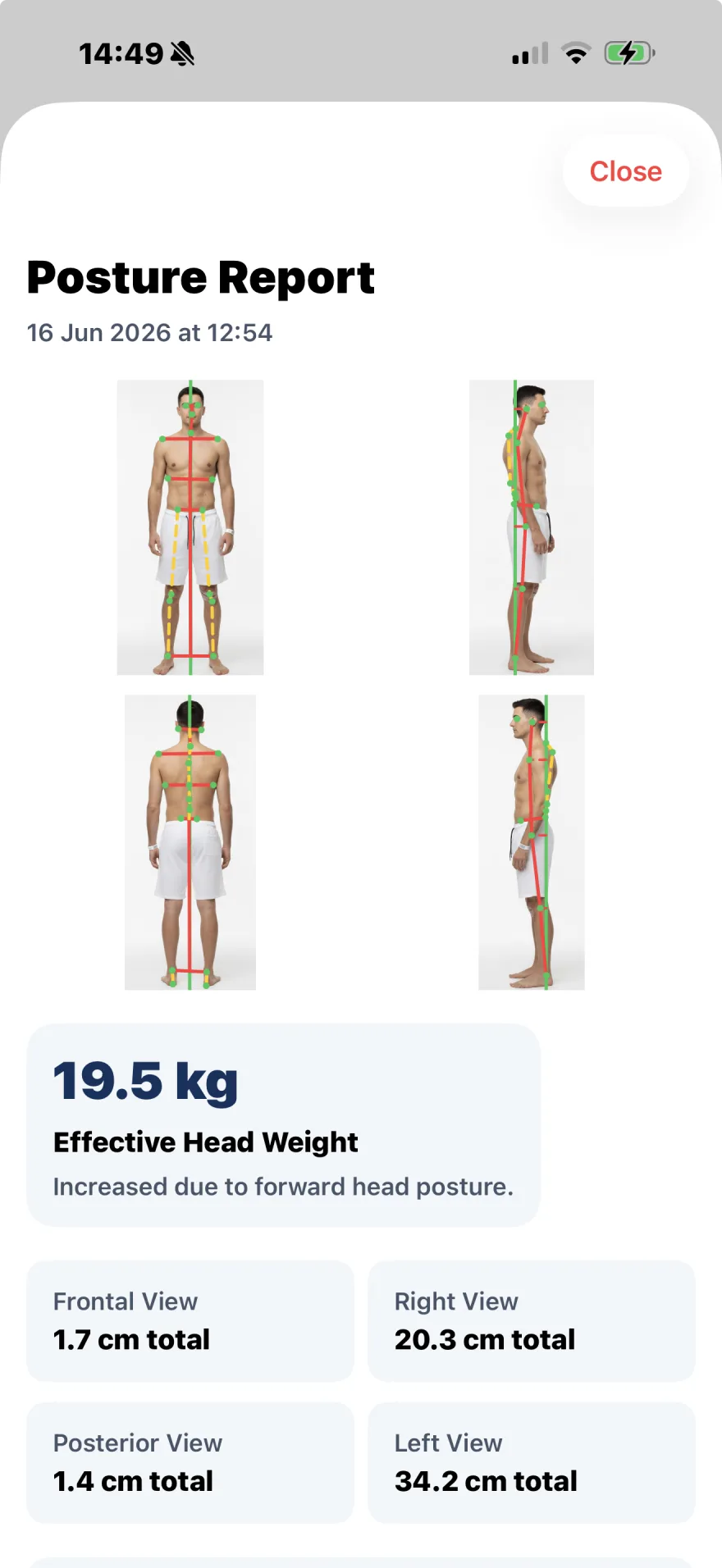
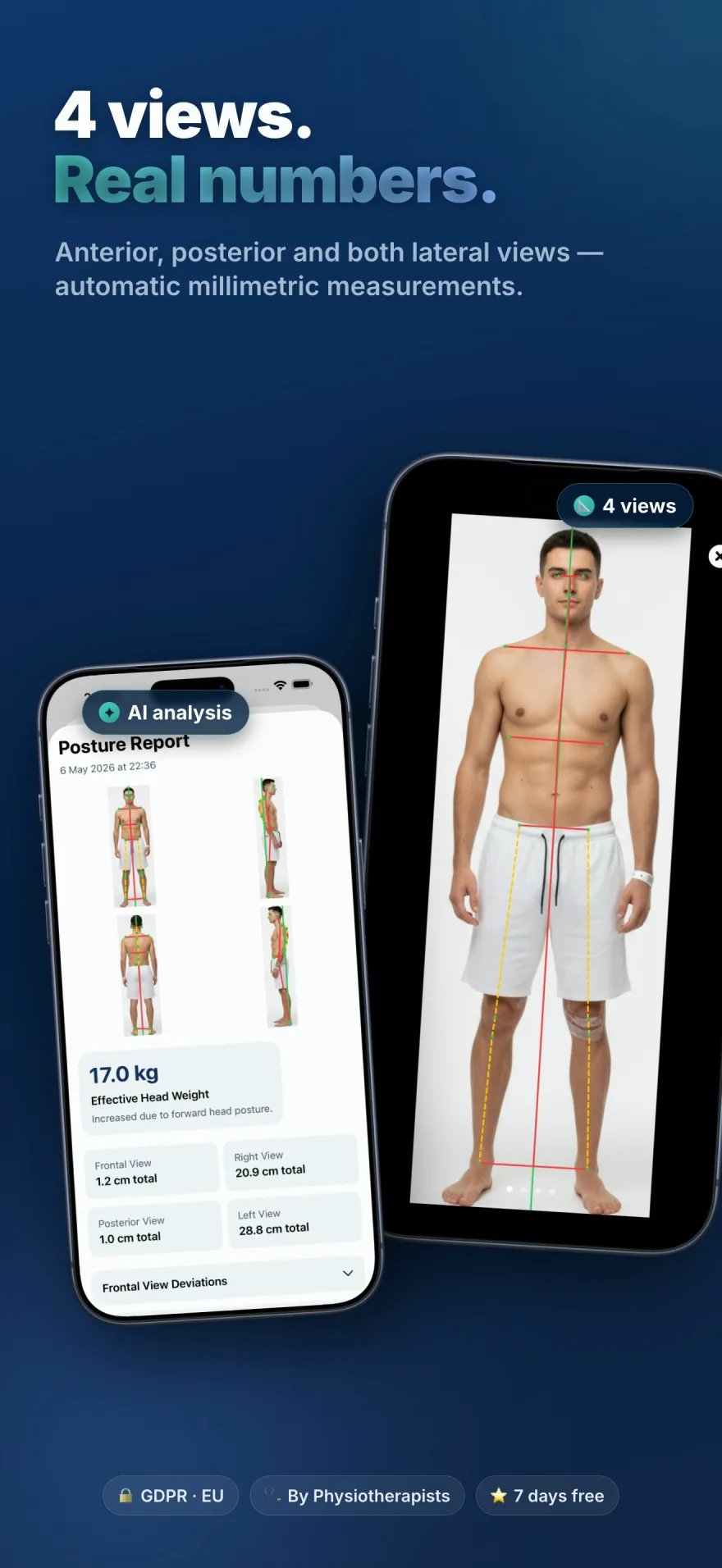
Point the camera and capture it all — posture in four views, range of motion, squat mechanics and pain mapping — with clinical-grade precision and under-3° error.
Prescribe
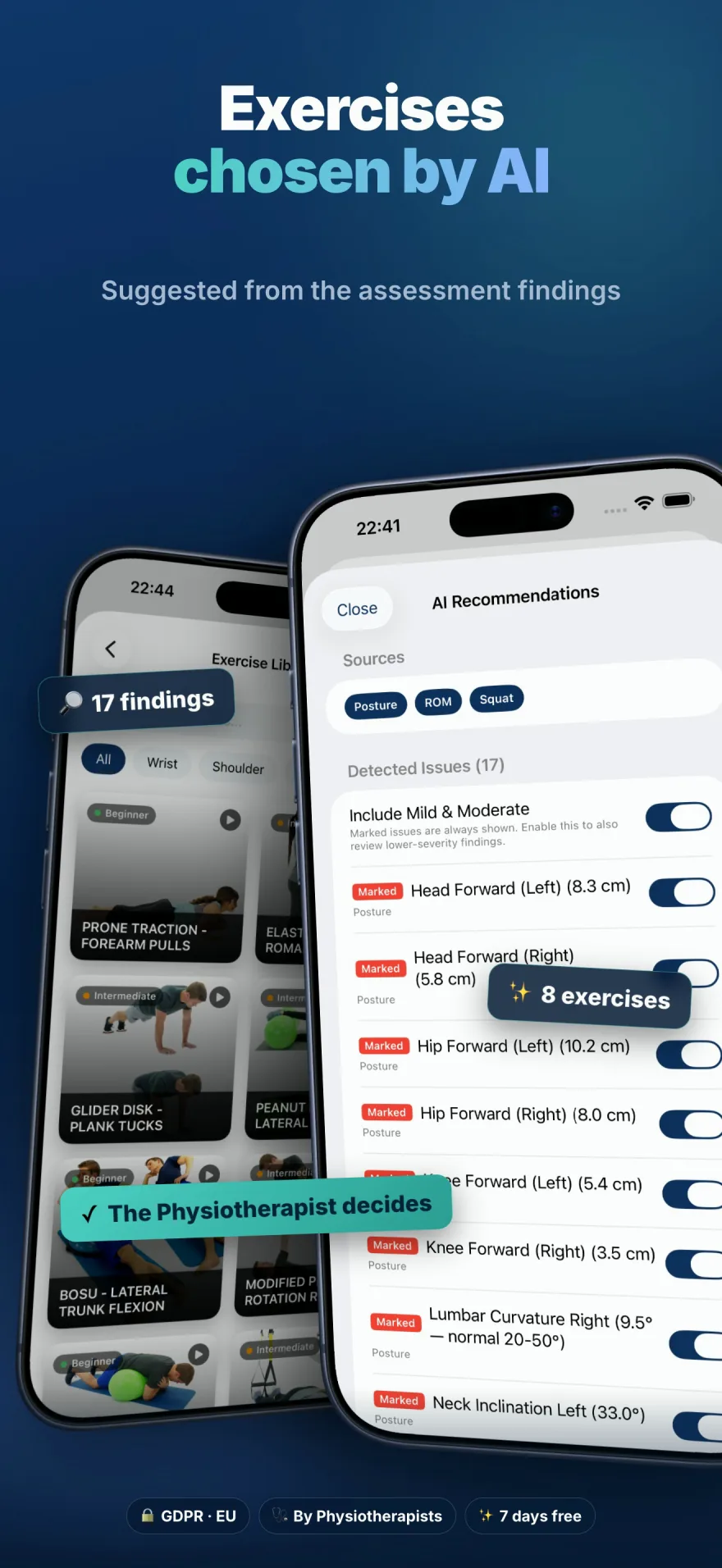
Pick a diagnosis and get a phase-based rehab protocol with goals, progression criteria and exercise suggestions — built on evidence (PEDro, Cochrane, PubMed).
Track
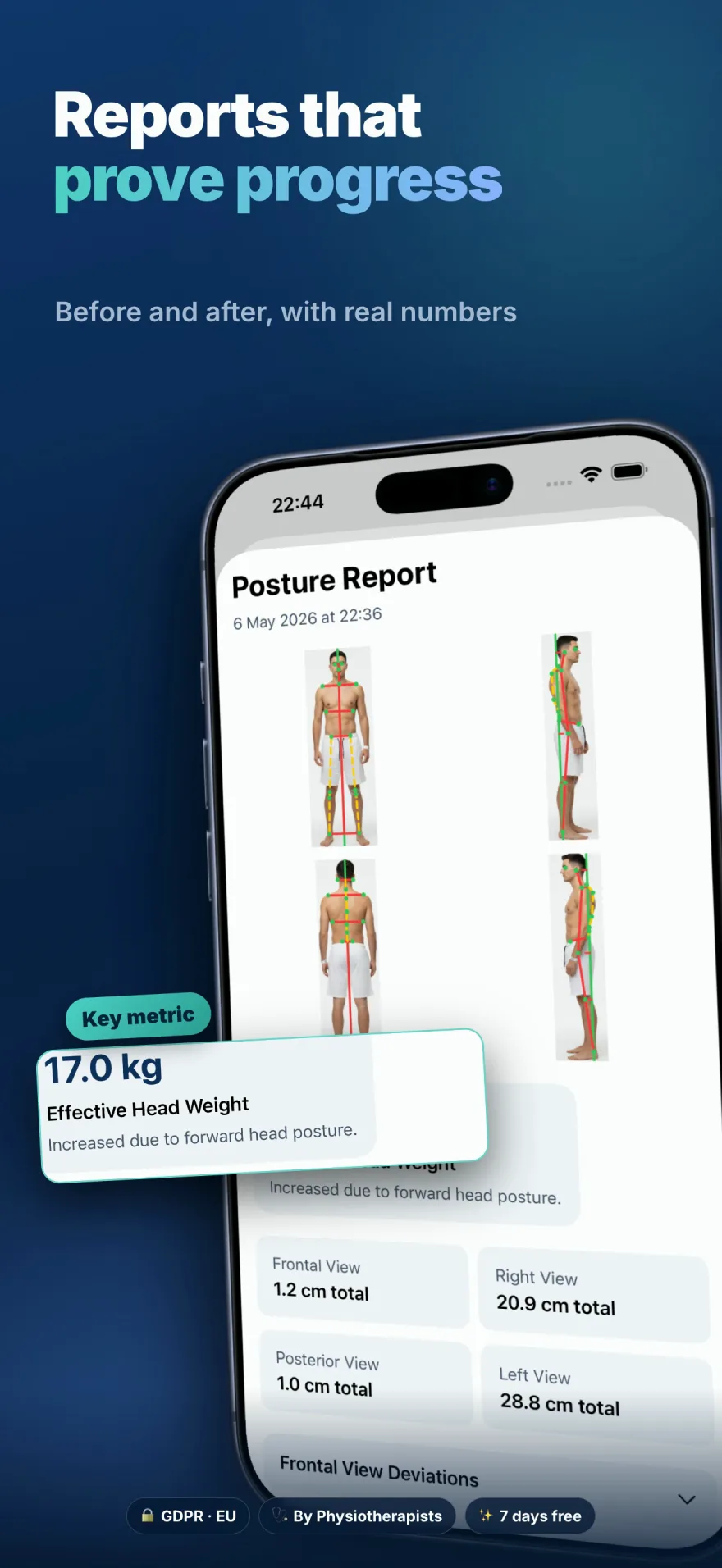
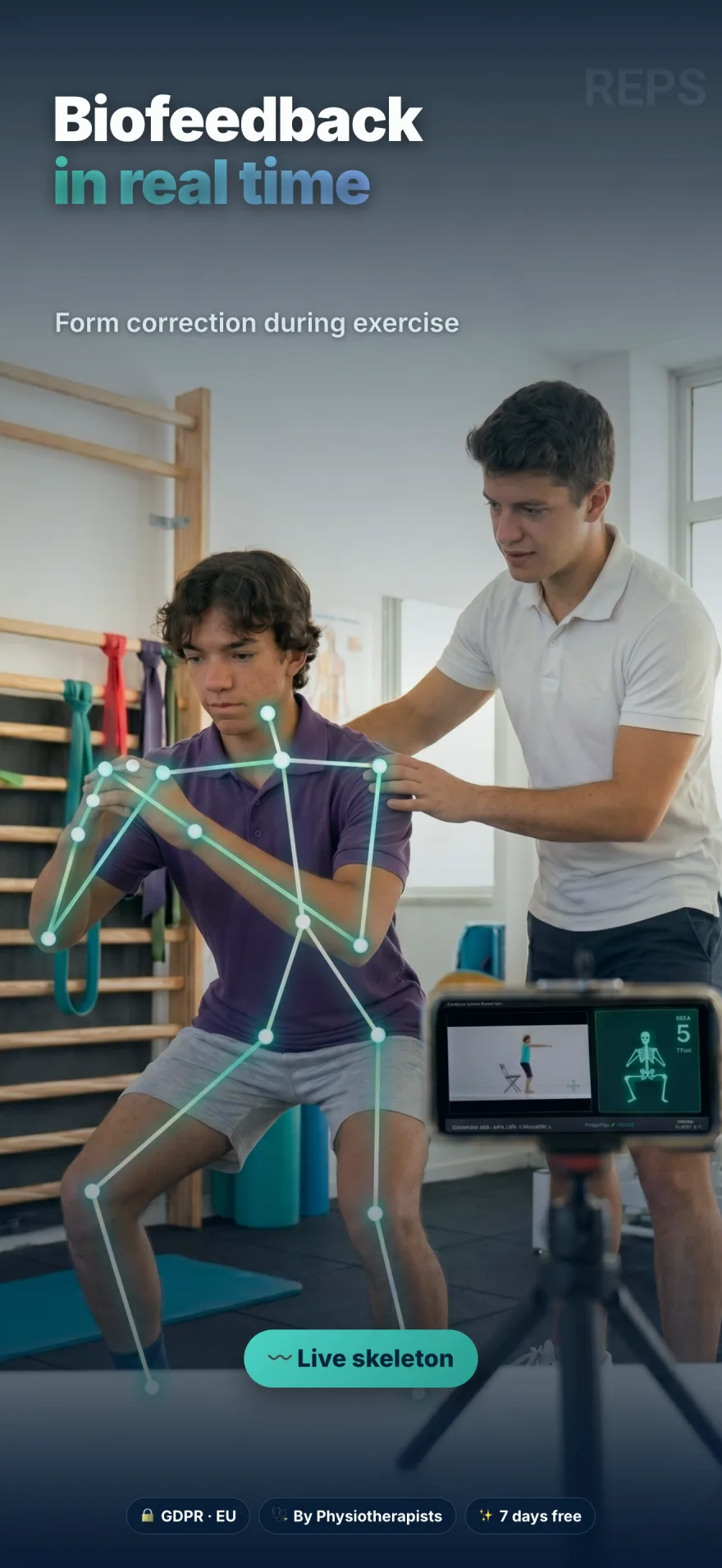
Join your patient's biofeedback session remotely — guide their form and assign exercises in real time. Before/after reports and a home portal keep them on track.
The whole clinical workflow, on one device

Swipe to explore →
Everything that keeps patients coming back
Numbers are just the start. These are the tools that strengthen the relationship — keeping patients engaged, informed and adherent between visits.
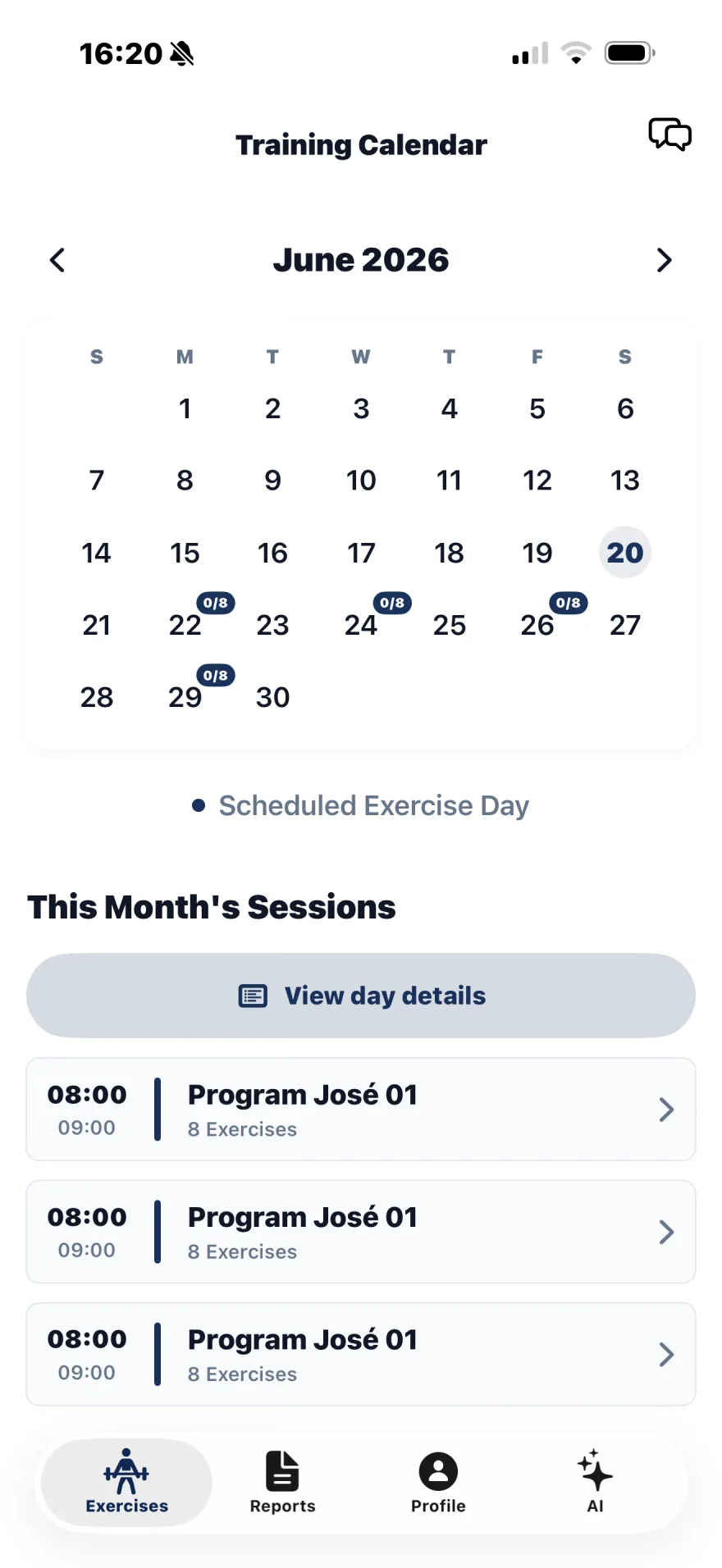
Their plan, day by day
Patients see a clear training calendar — scheduled exercise days and every session for the month, so nothing slips.
- Scheduled exercise days at a glance
- Programs linked to each session
A complete platform, from the first assessment to management
Clinical assessment
- PostureSync — 4 views
- ROMSync — joint range of motion
- SquatSync — squat analysis
- PainSync — pain assessment
- Injury test encyclopedia
- Subjective anamnesis + body map
- GaitSync — gait analysis
Clinical intelligence
- AI SOAP notes + translation
- Postural & comparative narratives
- AI functional analysis (score)
- Exercise recommendations (3 modes)
- Phase-based rehab protocols
- AI biofeedback summary
- Curated diagnoses linked to protocols
Treatment & remote
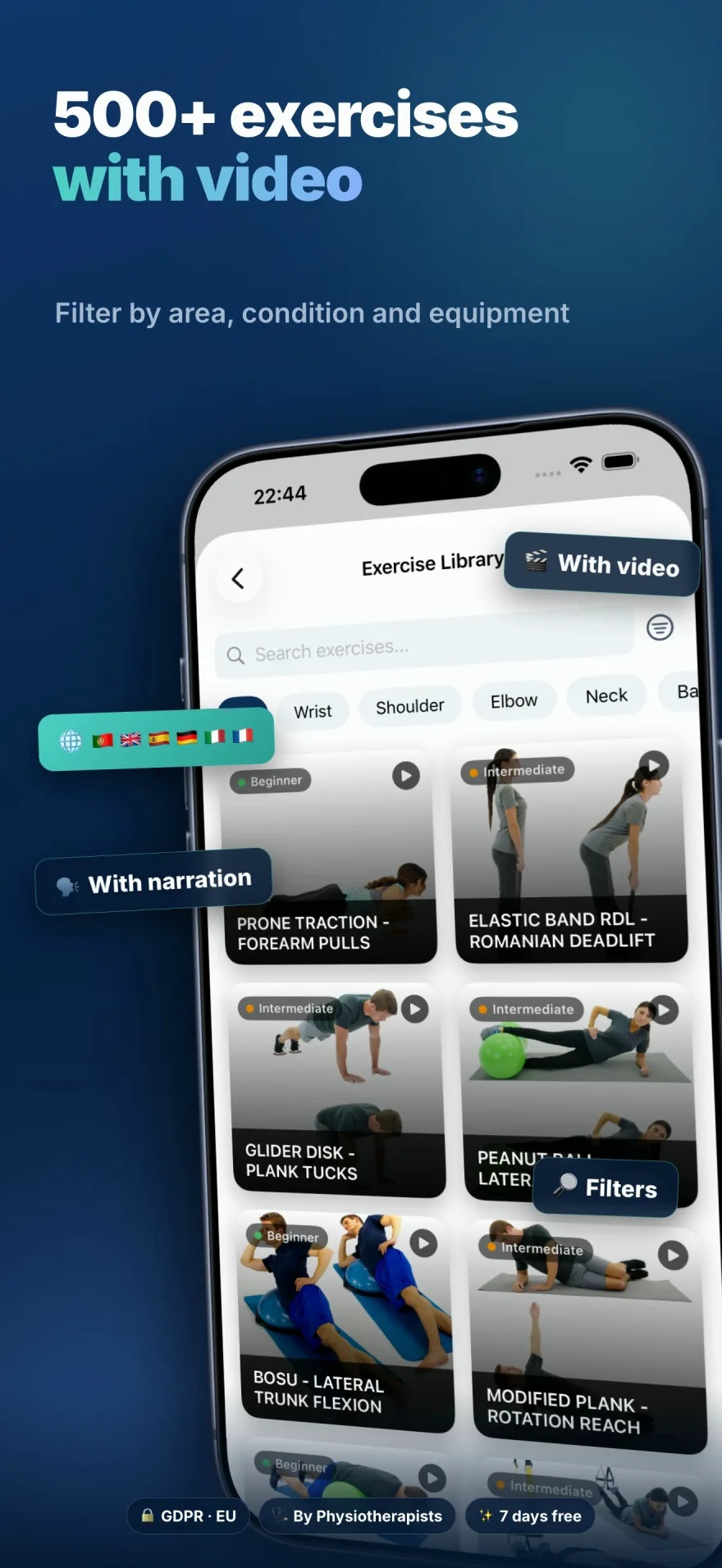
- Library of 500+ exercises with narration
- Real-time biofeedback + TV cast
- Telemed — skeleton only, in real time
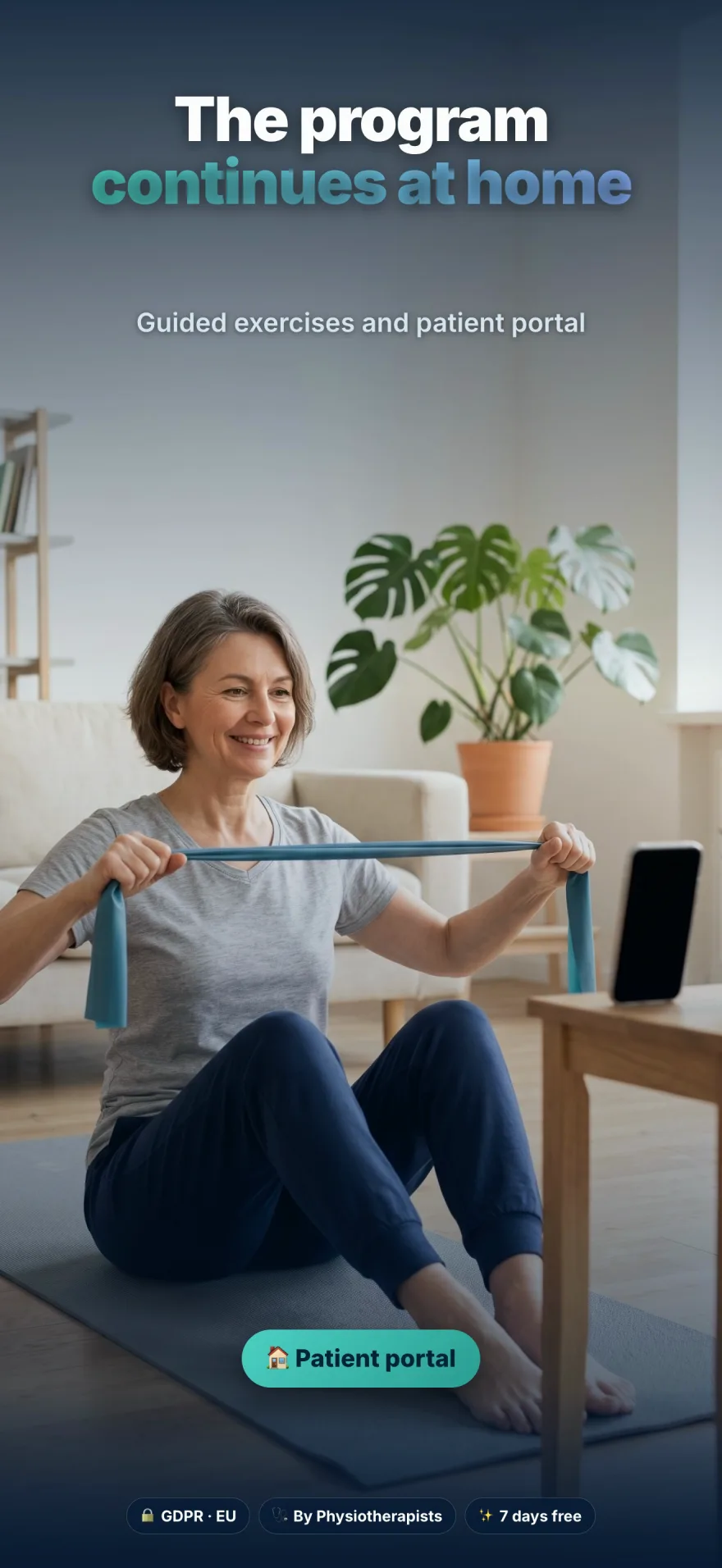
- Patient portal
- Home plan — exercises per phase
Practice management
- Clinic management dashboard (web)
- Patients: history, sessions, notes, PDF
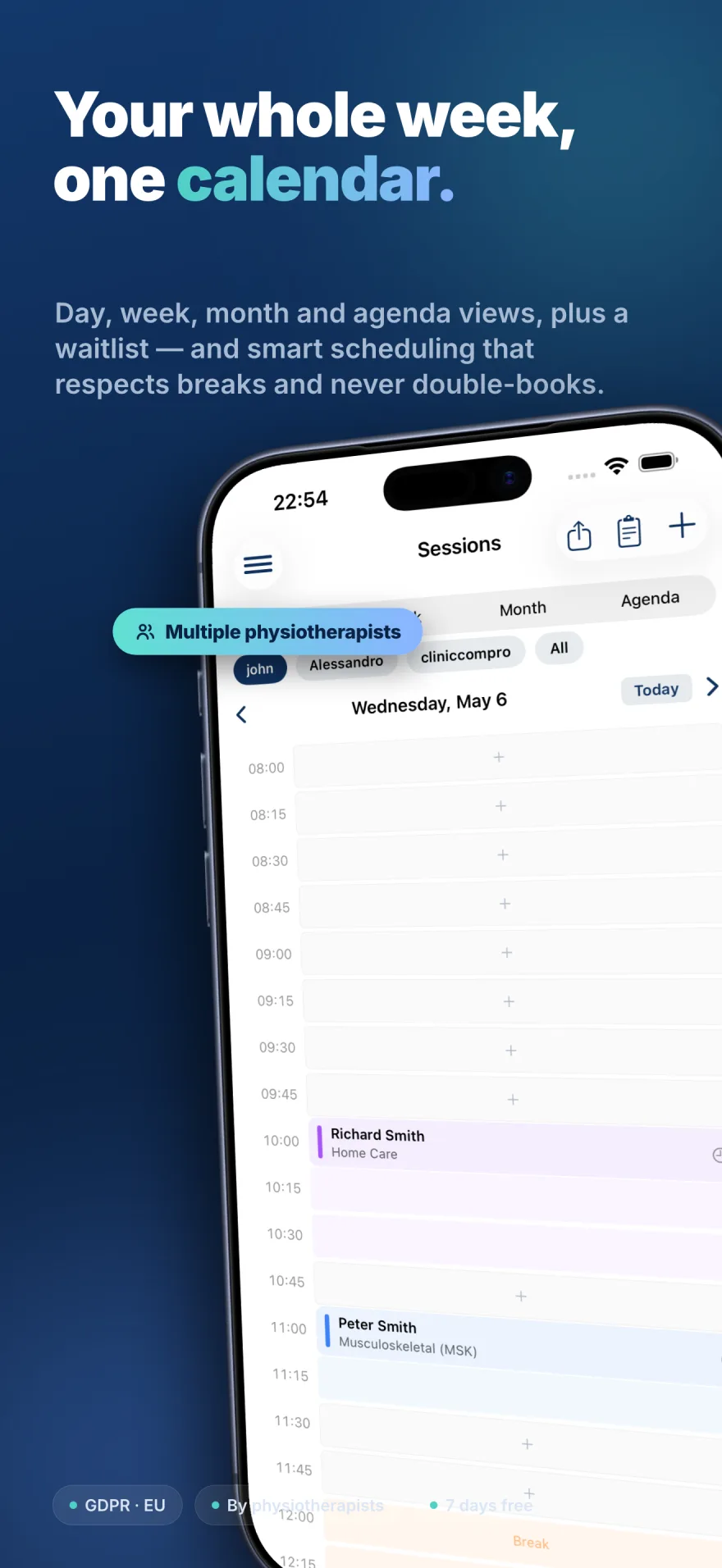
- Scheduling and waitlist
- Before/after reports + white-label PDF
- Home care: routes and cost/km (PRO)
- Rehab-phase dashboard + Smart Alerts
The platform keeps evolving
Calibrated measurements, reports you can actually send, and more of the app in your language
- PostureSync now asks for the patient's height and uses it to calibrate every distance in centimetres — earlier assessments for the same patient are recalibrated automatically
- A posture report is now small enough to email or hand to a patient, with the same detail on screen
- Session types, the account screens and the device messages now follow the language you work in
Simple and transparent. 7-day free trial.
Solo
BasicFor individual physiotherapists.
- All assessments
- 30 AI SOAP notes / mo
- Exercise library (500+)
- Up to 25 patients
Solo
ProAll the AI and premium tools.
- Everything in Basic, unlimited SOAP
- Advanced AI + treatment plans
- Biofeedback + Telemed + TV cast
- Up to 100 patients
Clinic
BasicFor clinics up to 5 physiotherapists.
- Clinic management dashboard
- Up to 5 physiotherapists
- Up to 200 patients
- Billing & scheduling
Clinic
ProFor growing clinics — full AI suite.
- Everything in Clinic Basic
- Advanced AI + treatment plans
- Biofeedback, Telemed & white-label
- Home care routes/km · up to 500 patients
One account across iPhone, iPad, Android & web — pay via the App Store or securely by card. Clinic plans are managed in the web dashboard.
From the literature
What the evidence actually says about assessment, dosing and adherence — written for physiotherapists, with the studies named.
Telerehabilitation in Parkinson's disease: A critical review of 2025 meta-analyses on motor outcomes and quality of life
Two 2025 meta-analyses show conflicting results on gait and balance, but consistent gains in quality of life. Here is how to interpret the data for clinical decision-making.
22 August 2026 · 6 studies
What recent evidence says about exercise effectiveness and adjunctive treatments in rotator cuff tendinopathy
Network meta-analyses rank concentric strengthening as the most effective exercise for dysfunction, while psychological factors and central sensitization explain outcome variability that structural diagnosis alone cannot.
21 August 2026 · 5 studies
What dose of exercise predicts knee OA improvement
Does frequency, volume, or intensity drive better KOOS and VAS outcomes in knee osteoarthritis? A review of recent evidence on adherence, dosing, and clinical impact.
20 August 2026 · 3 studies
Everything you need before you start
Which devices are supported?
Works on iOS 16+ and Android 7.0+. We recommend tablets for the best assessment experience, but phones work great too.
Is patient data secure and GDPR-compliant?
Yes. Fully GDPR-compliant: EU-hosted infrastructure, encrypted data, digitally signed consents, and a complete audit log. Data is never sold or shared.
How does the free trial work?
Every plan starts with a 7-day free trial. Download the app and sign in to your account — it works the same on iPhone, iPad, Android and web. You can pay through the App Store (Apple) or by card on the web or Android (Stripe); it’s all one account. Cancel any time before the trial ends.
How does biofeedback work?
Computer vision tracks body landmarks in real time, gives instant feedback on form, counts reps, and lets you cast to the TV. No special equipment — just the camera.
Do I need internet?
Yes. PhysioSync is a cloud platform, keeping your data securely synced across your devices at all times.
Start today. 7-day free trial.
Join the physiotherapists who traded the goniometer for the camera.